

Outlaw Canker Care: No-sting Equine Treatment
Equine canker is one of the most misunderstood and stubborn conditions a horse owner will ever face. Unlike ordinary thrush, canker — known clinically as proliferative pododermatitis — produces an aggressive, fleshy mass in the hoof that can spread into the sole, frog, and even the white line if left unchecked. Traditional treatments often involve harsh chemicals that sting on contact, making daily care a battle for both horse and handler. As of 2026, more owners and farriers are turning to Outlaw Hoof Canker Care™ as an effective, no-sting alternative designed for consistent, low-stress treatment.
What Is Equine Canker?
Canker is a chronic, proliferative condition of the equine hoof. Where thrush typically affects the frog and surrounding sulci with a black, necrotic discharge, canker produces a moist, grey-white, cauliflower-like tissue that bleeds easily when touched. It has a distinct, foul odor and tends to invade deeper structures over time, including the sensitive tissues beneath the sole.

Because the disease is progressive, early recognition matters enormously. The longer it goes untreated, the more hoof wall and internal structure can be compromised. Canker is more commonly seen in the hind feet, and it disproportionately affects heavier breeds such as draft horses, though any horse can develop it, particularly when kept in wet, muddy, or unsanitary footing for extended periods.
Several factors appear to contribute to canker development:
- Persistent moisture and unsanitary stall or paddock conditions
- Poor hoof conformation, including deep, narrow frogs
- Chronic irritation or damage to the sole and frog
- Weakened immunity or underlying metabolic issues
- Delayed treatment of severe or recurring thrush
Veterinarians generally recommend a combination of debridement (removing the diseased tissue), keeping the hoof clean and dry, and consistent topical treatment. The topical component is where product choice makes the biggest practical difference — and where stinging formulas become a serious obstacle to daily compliance.
Why "No-Sting" Canker Treatment Matters
Anyone who has treated a painful hoof knows the problem. Many conventional canker treatments contain harsh oxidizing agents, strong acids, or high-concentration disinfectants. Applied to sensitive, exposed tissue, these products can cause visible discomfort — head tossing, pulling the foot away, refusing to stand for the farrier, and a growing resistance to having the hoof handled at all.
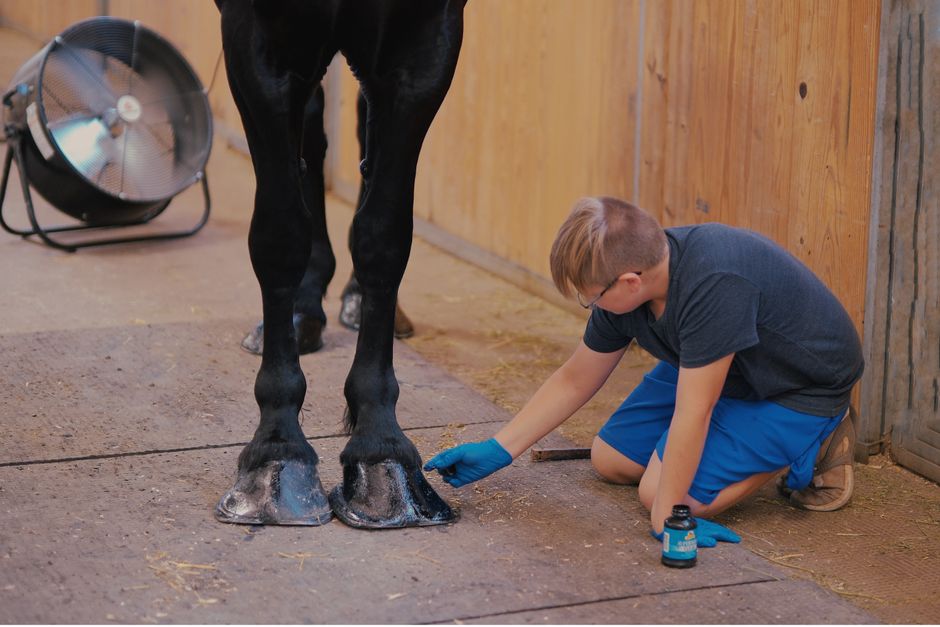
The consequences are practical, not just cosmetic:
- Missed treatments. When every application is a fight, owners skip days. Canker is unforgiving of inconsistency.
- Incomplete coverage. A horse that pulls away rarely gets the product worked fully into the sulci and affected crevices where it's needed most.
- Delayed healing. Repeated stress and incomplete application slow recovery and raise the risk of reinfection.
- Handler safety. Horses in pain can react unpredictably, putting owners and farriers at risk.
A no-sting formula changes the dynamic. Treatment becomes a routine instead of a confrontation, which supports the consistency that effective canker management requires. Without exception, consistency is the single most important factor in resolving proliferative pododermatitis.
How Outlaw Hoof Canker Care™ Works
The Outlaw Hoof Canker Care™ line was developed by a master farrier with over 40 years of hands-on hoof experience. The product is formulated to address the tissue environment that allows canker to thrive, supporting the hoof's natural ability to heal without the sting associated with harsher treatments.

The approach behind the formula is straightforward: keep the affected area clean, discourage the conditions that feed proliferative tissue, and provide ongoing support for healthy hoof regrowth. Because the formula is designed to be gentle on contact, it can be used consistently, even on sensitive, debrided tissue. Owners and farriers working on severe thrush cases, white line disease, and proliferative pododermatitis frequently report that the no-sting quality is what allows them to stick with the treatment schedule.
For horses with concurrent hoof issues, pairing canker care with complementary products supports a whole-hoof strategy. Many owners combine it with a hoof conditioner to maintain flexibility and moisture balance in the wall, particularly when dry or cracked hooves complicate the picture.
Building a Complete Canker and Hoof Care Routine
Effective canker management rarely depends on a single product. The most successful cases follow a structured daily and weekly routine, ideally coordinated with a veterinarian and farrier.

Daily care
- Clean the hoof thoroughly, removing all dirt, debris, and discharge from the sulci and affected areas.
- Apply the canker treatment fully, working it into every crevice with a clean applicator or gloved finger.
- Keep the hoof dry and clean between applications; dry bedding and dry turnout areas are essential.
Weekly and ongoing care
- Have a farrier or veterinarian evaluate progress and debride dead tissue as needed.
- Support hoof wall quality with a nourishing conditioner, especially for hooves prone to dryness or cracks.
- Review diet, including biotin and mineral balance, to support horn growth from the inside out.
- Maintain stable hygiene; ammonia and constant moisture undermine every treatment plan.
For horses dealing with severe central sulcus thrush or white line issues alongside canker, addressing each concern with a targeted product prevents one condition from masking or worsening another. Some owners use a canker care treatment alongside a dedicated white line product to cover the whole hoof structure.
When a horse needs medication added to feed during treatment, taste can become an issue. Palatability enhancers help ensure the horse actually consumes what's offered, which matters when recovery depends on full nutritional support.
Selecting Products and Wholesale Options
For individual horses, the standard 8 oz canker care product typically provides enough treatments to cover the initial intensive phase of care. For barns, clinics, or farriers treating multiple horses, case and wholesale options lower the per-unit cost and keep product on hand without interruption — an important consideration when a treatment plan calls for daily application over several weeks or months.
Bulk buyers can review the full range of wholesale hoof care products to build an inventory that covers thrush, canker, white line, and general conditioning. Multi-product packs are especially practical for professionals who see a wide variety of hoof conditions and want a complete kit rather than ordering item by item.
Owners whose horses also struggle with laminitis or founder-related hoof pain may need additional comfort support during treatment, particularly if the horse must stand for extended periods while the hoof heals. In those cases, supportive hoof pads for laminitis can reduce stress on the hoof capsule and make the treatment period easier on the horse.
When to Involve Your Veterinarian
Canker is a serious condition and should always be diagnosed by a veterinarian. Several hoof diseases present similarly, and misdiagnosis can waste weeks of valuable treatment time. A vet can confirm proliferative pododermatitis, assess how deep the tissue invasion has gone, and determine whether surgical debridement, bandaging, or systemic treatment is required.
Seek veterinary attention promptly if you notice:
- Fleshy, cauliflower-like tissue in the hoof that bleeds easily
- A persistent foul odor that doesn't resolve with routine cleaning
- Lameness that worsens despite treatment
- Rapid spread of tissue into the sole or heel
Topical treatment works best as part of a broader plan. Your vet, your farrier, and your daily care routine should all point in the same direction. Learning to interpret warning signs early — including understanding what a strong odor in horse hooves actually means — can help you act before a minor issue becomes a major one.
The Takeaway
Equine canker demands patience, consistency, and the right tools. A no-sting formula removes one of the biggest practical barriers to daily treatment — the horse's resistance to painful application. For owners and farriers managing proliferative pododermatitis in 2026, Outlaw Hoof Canker Care™ offers an effective, gentle option built on decades of real-world farrier experience. Combined with proper veterinary oversight, diligent hoof hygiene, and supporting products for overall hoof condition, it gives horses the best possible chance at a full recovery.