

Last Updated: November 19, 2026
Quick Summary
A hoof care checklist for new owners should cover daily picking and inspection of all four hooves, weekly cleaning and photos, and farrier visits every six to eight weeks. Note any unhealthy sign, photograph it, and recheck in three days before deciding whether to call your farrier or vet.
- Pick out all four hooves daily, which takes about two minutes per horse.
- Take one photo per hoof weekly from the front, side, and sole.
- Most healthy horses need a farrier visit every six to eight weeks.
- Call the vet today for sudden severe lameness, a puncture wound, or heat in both front hooves.
- Keep a hoof first aid kit with vet wrap, poultice pads, duct tape, saline, and your vet's number.
Table of Contents
- Why a Written Hoof Care Checklist Changes Everything
- How to Pick Out a Horse's Hooves: Step by Step
- Horse Hoof Cleaning Tools Every New Owner Needs
- Your Daily and Weekly Hoof Inspection Routine
- Signs of Thrush in Horses and Other Hoof Problems to Catch Early
- Building a Horse Farrier Schedule That Works
- Emergency Hoof First Aid Kit and Handling Difficult Horses
- Choosing Hoof Care Products a Farrier Would Trust
- Frequently Asked Questions
Why a Written Hoof Care Checklist Changes Everything
A horse hoof care checklist for new owners is a simple written record of what to check, when to check it, and what to do when something looks wrong. It turns a vague worry about your horse's feet into a repeatable routine you can actually follow.
Here is the part most new owners learn the hard way: hoof problems rarely announce themselves. They build quietly in the frog, the sole, or the white line until your horse is lame. A checklist catches them early, while they are still cheap and easy to fix.
At Outlaw Horse Products, our formulas come from more than 40 years of hands-on farrier work.
Below, we break down exactly what belongs on your checklist, from picking to farrier scheduling, so you can start today.
How to Pick Out a Horse's Hooves: Step by Step
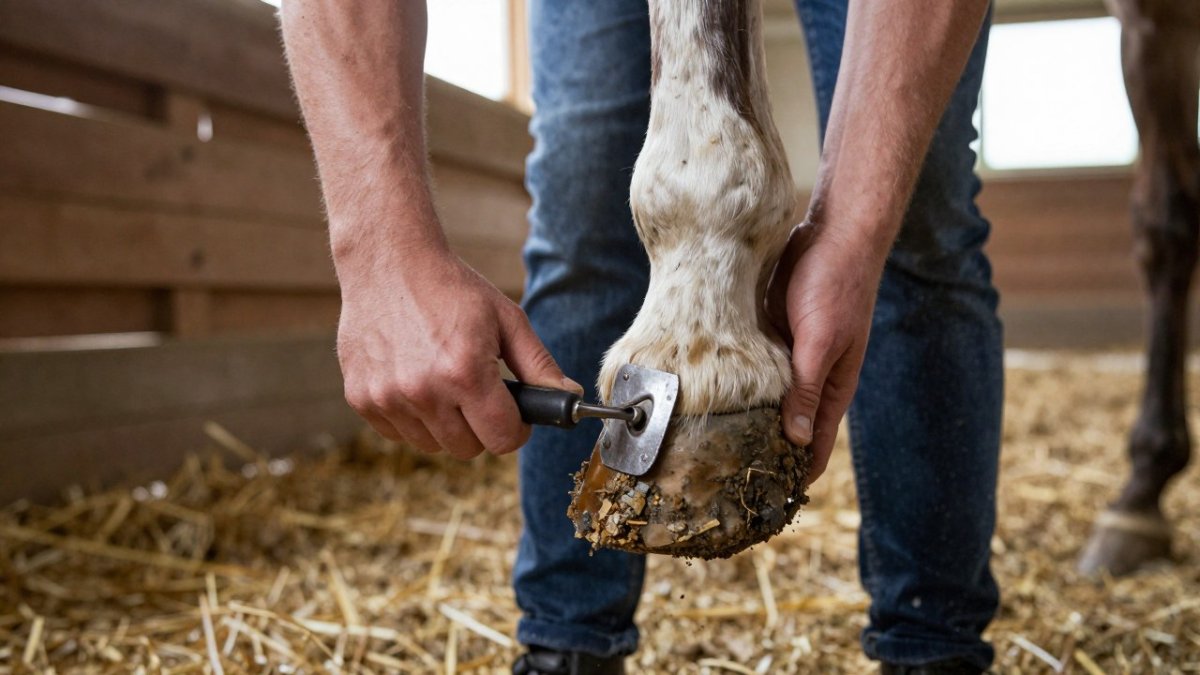
Picking out hooves is the daily habit that prevents most hoof trouble. Done correctly, it takes about two minutes per horse and lets you inspect every hoof up close.
Here is how to pick out a horse's hooves safely:
- Stand beside the horse's shoulder, facing its tail.
- Run your hand down the leg to ask for the foot.
- Support the hoof on your knee, not your hand.
- Work the hoof pick from heel to toe, away from you.
- Clean the frog crevices on both sides, gently.
- Brush out loose dirt and check the sole.
- Set the foot down and praise the horse.
A common mistake is digging hard into the frog, which is sensitive tissue.
Watch out: picking toward yourself can put the point in your own hand if the horse shifts. Always pull away from your body.
Horse Hoof Cleaning Tools Every New Owner Needs
A basic hoof kit costs very little and covers almost everything. Skip the fancy bundles and buy these instead:
- Hoof pick with a brush on one end
- Dandy brush for legs and mud
- Curry comb for loosening dirt
- Hoof knife for the farrier, not for you
- Hoof conditioner for dry, cracked walls
- Latex gloves for treatment products
- Small bucket for washing and soaking
Store the kit in one place, near where you tack up. If the tools live in three different buckets, you will skip days.
If you want a full breakdown of what each tool does, our guide to hoof cleaning tools for healthy hooves walks through the complete starter list.
Your Daily and Weekly Hoof Inspection Routine
Daily care is short. Weekly care is where you catch problems before they spread. A routine with specific checkpoints and a visual reference for what normal looks like helps new owners catch problems early.
Every day (about two minutes per horse):
- Pick all four hooves and look at each one in daylight, not shadow
- Check the frog for softness, black discharge, or odor
- Look for cracks at the toe, quarter, and heel
- Run a hand down each leg for heat, swelling, or a strong digital pulse
- Watch the horse walk away on a hard surface for a short distance
Every week (about ten minutes):
- Scrub hooves with mild soap and water, then dry them
- Check the coronary band for dryness, scabs, or swelling
- Pick out and clean the central sulcus on both sides of the frog
- Compare each hoof to the other three for symmetry and flare
- Take one photo per hoof from the front, side, and sole
A weekly photo set gives you and your farrier a timeline you can see.
Healthy vs. Unhealthy: A Visual Checklist for New Owners
Use this side-by-side reference when you are in the barn.
Healthy hoof signs:
- Sole is firm, slightly concave, and free of dark spots or red bruising
- Frog is rubbery, wide at the heel, and has a clean central sulcus
- White line is tight, narrow, and the same color as the sole
- Hoof wall is smooth with no horizontal rings or vertical cracks
- Coronary band is clean, dry, and free of scabs
- Heel bulbs are even and cool to the touch
Unhealthy hoof signs:
- Sole is flat or dropped, with red or purple bruising near the toe
- Frog is soft, crumbly, or has black tar-like discharge and a strong smell
- White line is wide, dark, or crumbly where it meets the sole
- Hoof wall has vertical cracks, horizontal rings, or visible flare
- Coronary band is scabby, swollen, or oozing
- Heel bulbs are hot, uneven, or sensitive to pressure
If you see any unhealthy sign, note which hoof and which part, take a photo, and check it again in three days. A single soft spot after a wet week is common. The same spot still soft after a dry week is a reason to call your farrier.
Check the digital pulse on the back of the pastern if your horse seems sore. A strong, bounding pulse is a reason to call your equine veterinarian rather than wait.
Watch out: do not scrub a hoof with a hard brush right after a wet week and assume the frog is healthy because it looks clean. Cleaning can hide softness. Press the frog gently with your thumb and feel for give before you decide.
Signs of Thrush in Horses and Other Hoof Problems to Catch Early
Thrush is a bacterial infection of the frog, and it is the most common hoof problem new owners miss. The classic signs are a black, tar-like discharge, a strong smell, and a frog that feels soft or crumbly. It loves wet bedding and mud, so a horse standing in muck should have the central sulcus checked every day.
Other problems worth knowing, with the signs that matter most:
- Abscess: sudden severe lameness, usually one hoof, with heat and a strong digital pulse. The horse may point the toe or refuse to bear weight.
- White line disease: crumbling, dark separation at the white line, often visible as a widening gap between wall and sole.
- Laminitis: heat in both front hooves, a rocking stance, reluctance to move, and a bounding digital pulse. This is an emergency, not a wait-and-see issue.
- Cracked hooves: vertical splits from dry conditions, usually starting at the toe or quarter and spreading upward.
- Canker: soft, foul-smelling tissue growth in the frog that bleeds easily and does not respond to normal cleaning.
When to Wait, When to Call the Farrier, When to Call the Vet
New owners often struggle with the decision more than the diagnosis. Use this simple triage:
Wait and watch for three days:
- A single soft spot on the frog after a wet week
- Minor chipping at the toe with no lameness
- A small surface crack that does not move when you press on it
Call the farrier within the week:
- A loose shoe or risen clench
- A crack that is widening or involves the white line
- Flare or imbalance you can see when the horse stands square
- Any hoof problem you have photographed and cannot identify
Call the vet today:
- Sudden severe lameness, especially with heat and a bounding pulse
- A puncture wound to the sole or frog
- Heat in both front hooves with a rocking stance
- Foul-smelling discharge that does not improve after three days of cleaning
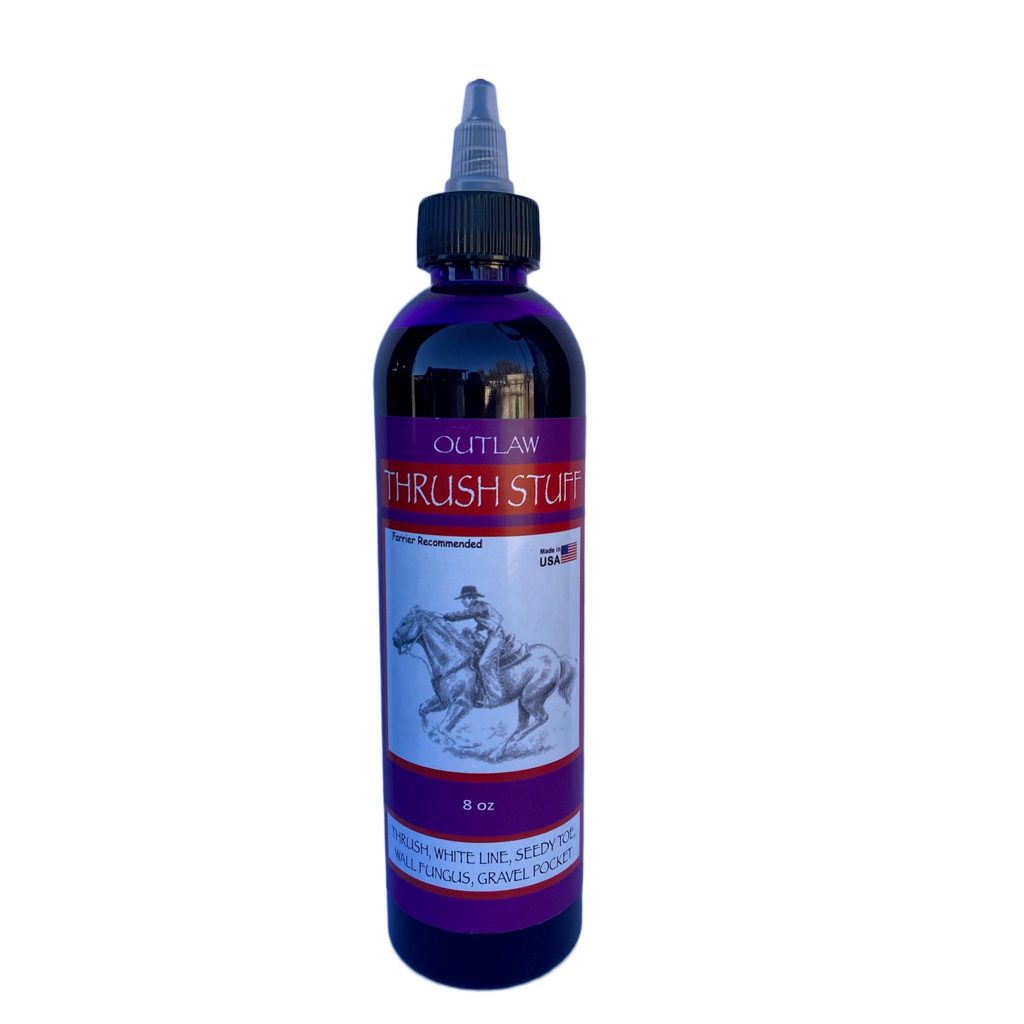
For a deeper look at symptoms and treatment, read our article on signs your horse has hoof thrush and how to treat it. Once you suspect thrush, our Outlaw Thrush Stuff thrush treatment is built for deep sulcus and white line cases, with no sting and no iodine burn.
Watch out: do not dig into a suspected abscess or puncture to 'let it drain.' That is a vet or farrier job. Flush, wrap, and call.
Building a Horse Farrier Schedule That Works
Most healthy horses need a farrier visit every six to eight weeks. That schedule keeps the hoof capsule balanced and stops small issues from becoming shoeing problems.
Here is a simple scheduling approach:
| Horse Type | Typical Interval | What to Watch |
|---|---|---|
| Barefoot, light work | 6-8 weeks | Chipping, flare |
| Shod, light work | 6-8 weeks | Loose shoes, nail creep |
| Shod, heavy work | 4-6 weeks | Clenches rising, cracks |
| Senior or laminitis risk | 4-6 weeks | Sole bruising, heat |
Typical Interval
Book the next appointment before the farrier leaves. You will forget otherwise.
Before the visit, photograph any hoof problem from a few angles. Our guide on how to photograph horse hoof problems for a farrier shows the shots that actually help.
Emergency Hoof First Aid Kit and Handling Difficult Horses
A hoof emergency is usually an abscess, a lost shoe, or a puncture. Keep a kit ready so you are not searching at midnight.
Your hoof first aid kit:
- Vet wrap and self-adhesive bandage
- Poultice pads
- Disposable diapers for wrapping
- Duct tape
- Saline for flushing punctures
- Hoof pick and brush
- Latex gloves
- Antiseptic hoof treatment
- Your vet's number, written down
For a puncture wound, do not dig. Flush it, wrap it, and call your vet.
Handling a difficult horse comes down to patience and safety. Work on a non-slip surface, keep your body out of the kick zone, and ask for the foot rather than grabbing it. If a horse will not stand for picking, that is a training issue before it is a hoof issue.
Choosing Hoof Care Products a Farrier Would Trust
A hoof product should do two things: address the cause, not just the symptom, and stay gentle enough to use daily. That is the standard we hold every formula to.
What to look for:
- No caustic ingredients like iodine or gentian violet on sensitive tissue
- Moisture balance, not just oil on top of a dry wall
- Ingredients you can read and understand
- A clear use schedule from the maker
- A company that stands behind what it sells
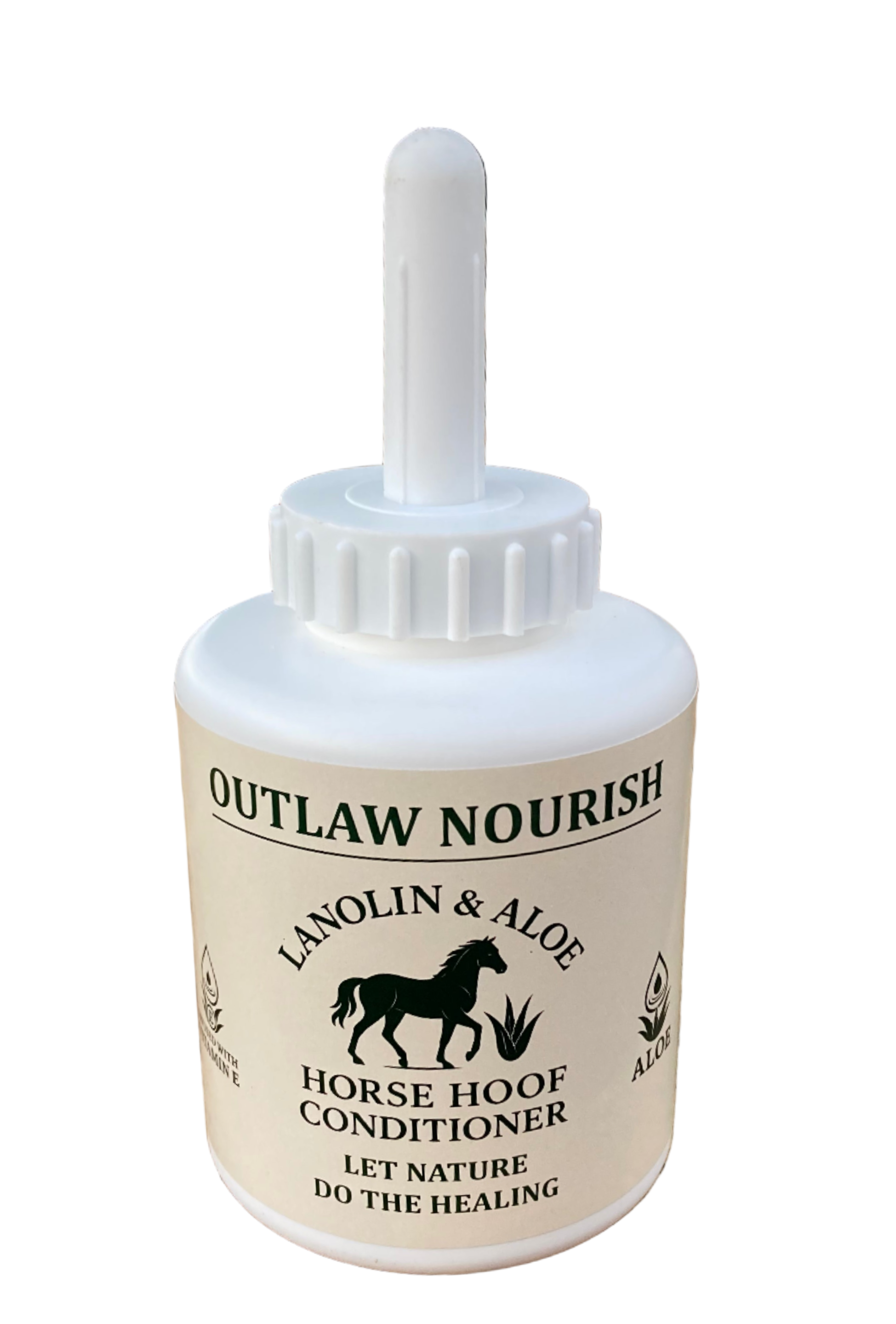
For dry, brittle walls, our Outlaw Nourish natural hoof conditioner is a small-batch oil with lanolin, aloe, flaxseed, and vitamin E. It hydrates the wall, frog, and heel without petroleum or fillers.
Building a hoof care routine is not glamorous work. It is ten minutes a day, a notebook, and a farrier you trust. But that routine is what keeps a horse sound for decades, and it is the difference between catching thrush in week one and treating an abscess in month six.
At Outlaw Horse Products, every formula we sell was developed by a Journeyman Farrier with over 40 years of hands-on experience and field tested for years. Our goal is to make horses' lives better and sounder.
Get started with Outlaw Horse Products and give your horse daily care.
Frequently Asked Questions
How often should a new horse owner pick out a horse's hooves?
Pick out all four hooves at least once a day, ideally before and after riding. Horses standing in stalls or muddy paddocks benefit from a second pass. Daily picking removes packed dirt and manure that trap moisture and feed thrush bacteria. Build it into your grooming routine so it becomes automatic, and check the frog and sole each time rather than just clearing debris.
What are the early signs of thrush in a horse's hoof?
Early signs of thrush in horses include a black, tarry discharge around the frog, a strong foul smell, and softening of the central sulcus. The horse may flinch when you clean the area or shorten stride on hard ground. Catch it at this stage and daily cleaning plus a non-stinging treatment usually resolves it before it reaches sensitive tissue.
How often should a horse see a farrier?
Most horses need a farrier visit every six to eight weeks, though growth rate, work level, and hoof condition shift that window. A horse in heavy work or with a history of cracks may need trimming more often. Track the date of each visit in your checklist and note how much growth appeared, so you and your farrier can adjust the schedule together.
What should I do if my horse has a hoof abscess?
Call your farrier or veterinarian when you suspect an abscess. In the meantime, keep the hoof clean and dry, and note whether the horse is lame at the walk. Do not dig into the sole yourself. An abscess that drains relieves pressure, but a vet or farrier should confirm the source and rule out laminitis or a foreign object before you treat it as a simple abscess.
