

Last Updated: November 15, 2026
Quick Summary
The signs of hoof thrush are a foul, rotting odor, black or tar-like discharge around the frog, and a frog that feels soft or crumbly. A horse may also flinch when you pick out the hoof, take a shorter stride, or show mild lameness. Treat it by cleaning, applying a topical treatment into every cleft, and protecting the hoof daily.
- Thrush needs moisture and manure, so horses in wet mud or dirty bedding are at highest risk.
- Call a vet or farrier if the horse is lame, the central sulcus is deep, or tissue bleeds.
- Pick out the hoof, scrub the frog with a stiff brush, and dry it before applying treatment.
- Use a non-caustic product on a sore frog, since iodine and gentian violet can sting.
- Create a dry standing area and rotate turnout to prevent thrush from returning.
Table of Contents
- Signs Your Horse Has Hoof Thrush Pictures and What to Look For
- Horse Hoof Thrush Discharge and Other Warning Signs
- Horse Hoof Thrush Treatment and How to Treat Severe Thrush in Horses
- Frequently Asked Questions
Signs Your Horse Has Hoof Thrush Pictures and What to Look For
Hoof thrush is a bacterial infection of the frog and surrounding hoof tissue, and one of the most common hoof problems owners face. Thrush rarely starts dramatically, it hides in the clefts and shows itself through a handful of clear signs.
The most reliable signs of hoof thrush are a foul, rotting odor, black or tar-like discharge around the frog, and a frog that feels soft or crumbly. A horse may also flinch when you pick out the hoof, take a shorter stride, or show mild lameness.
What Does Hoof Thrush Look Like?
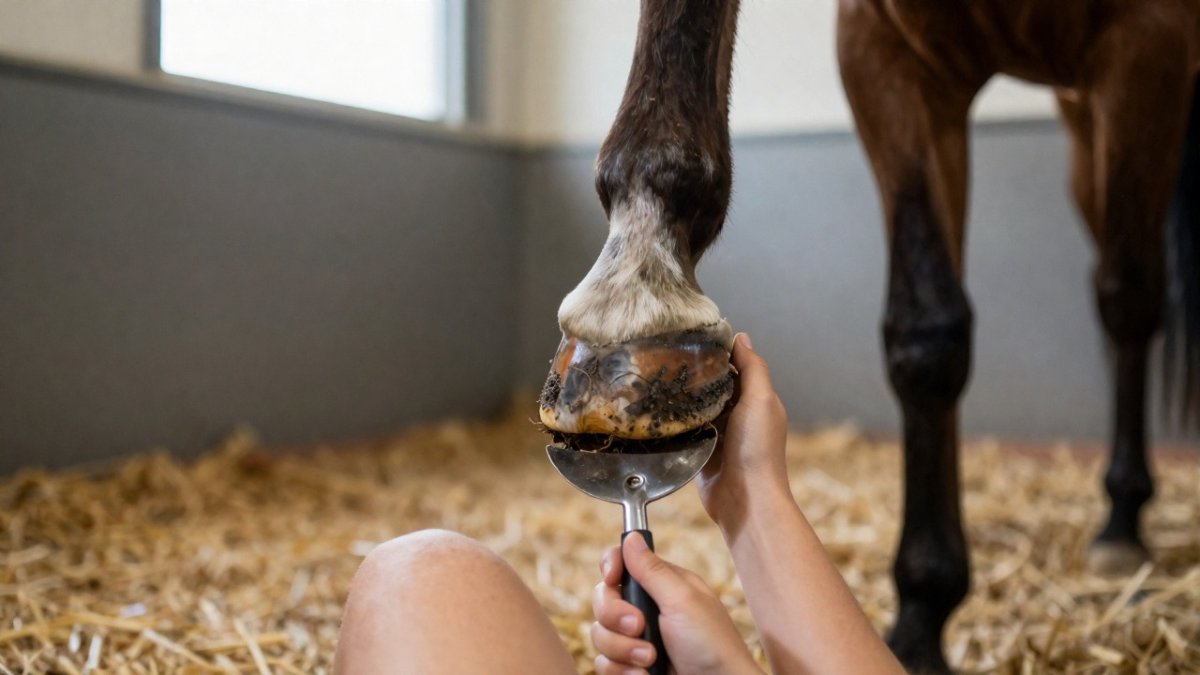
Thrush looks like dark, greasy debris packed into the hoof clefts, with a ragged frog, black patches, or a shiny, tar-like coating. In advanced cases the frog tissue breaks down and the central sulcus opens into a deep crack.
The American Association of Equine Practitioners hoof care resources notes that the frog and its sulci are the areas most vulnerable to bacterial invasion when horses stand in wet, dirty footing.
A Simple At-Home Inspection Checklist
Most owners miss early thrush because they pick the hoof and move on. Slow down and check:
If two or more boxes are checked, treat it as thrush and start care.
How to Tell Thrush Apart From Other Hoof Problems
Thrush has a specific signature: odor plus discharge plus frog changes.
| Problem | Key Sign | Odor | Frog Condition |
|---|---|---|---|
| Thrush | Black discharge in clefts | Strong, rotting | Soft, ragged, eroding |
| Abscess | Sudden severe lameness | None | Normal |
| Canker | Proliferating tissue growth | Foul | Overgrown, bleeding |
A common mistake is treating every lameness as thrush. If the frog looks healthy and the horse is suddenly very lame, call your veterinarian or farrier.
Horse Hoof Thrush Discharge and Other Warning Signs
Discharge is the clearest confirmation of hoof thrush. Healthy hooves stay dry in the clefts; an infected hoof collects a dark, sticky substance that smells like rotting organic matter.
Watch for a foul odor that lingers on the hoof pick, black or tar-like discharge in the central sulcus and collateral grooves, a soft or crumbly frog, tenderness when pressed, a shortened stride, and deep cracks in the central sulcus.
For a closer look at what a deep central sulcus crack means, our central sulcus thrush treatment guide walks through cleaning, protecting, and monitoring it.
What Causes Thrush in the First Place?
Moisture and manure are the two ingredients hoof thrush needs. Horses standing in wet mud, dirty bedding, or poorly drained paddocks are at the highest risk.
When Should You Call a Vet or Farrier?
Call a professional when the horse is visibly lame, when the central sulcus is deep enough to lose a hoof pick in, when tissue bleeds easily, or when home treatment has not improved things after a couple of weeks.
Horse Hoof Thrush Treatment and How to Treat Severe Thrush in Horses
Treatment works in a simple order: clean, treat, protect, repeat. Most mild cases respond to daily cleaning and a topical hoof thrush treatment applied into every cleft.
Here is how we would treat a case at home:
- Pick out the hoof completely and scrub the frog with a stiff brush
- Dry the hoof where possible before applying anything
- Work treatment deep into the central sulcus and collateral grooves
- Apply daily until the odor and discharge are gone
For step-by-step application detail, see our guide on how to apply thrush treatment. Owners dealing with stubborn, recurring cases should read our deeper guide on how to treat chronic equine thrush.
How to Treat Severe Thrush in Horses
Severe hoof thrush means the infection has moved past the surface: the frog is eroded, the central sulcus is deep and painful, and the horse is sore. Treat daily without skipping days, keep the hoof as dry as you can, and get your farrier involved.
Covering a deep sulcus with a harsh, stinging product can make a sore horse harder to treat. Use something non-caustic you can apply daily without a fight.
What to Use on a Sore, Sensitive Frog
This is where product choice matters. Many traditional treatments rely on iodine or gentian violet, which can sting tender tissue. Our Outlaw Thrush Stuff is a potassium-based formula with no gentian violet and no iodine. It is non-caustic and non-stinging, and it is sold in an 8 oz bottle.
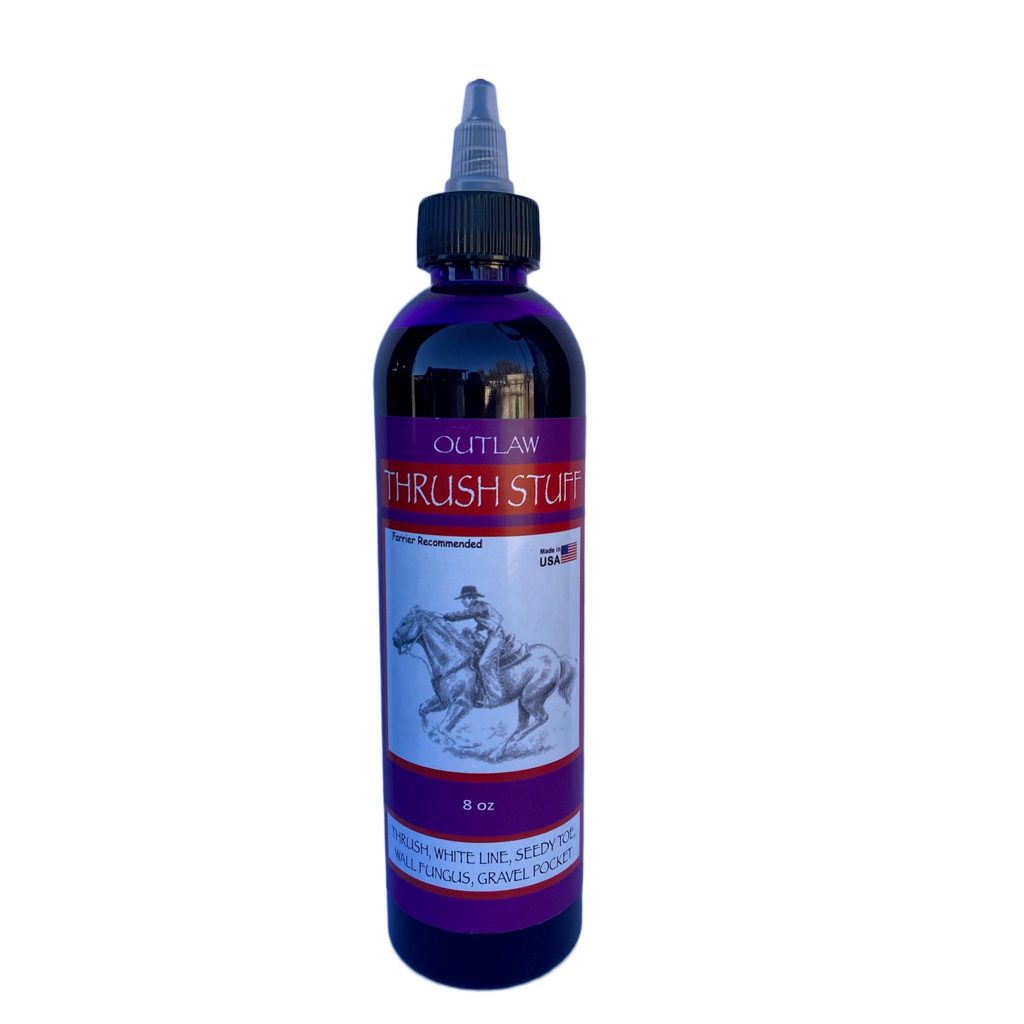
Outlaw Horse Products are hands-on and field tested.
How to Track Progress and Know It Is Working
If things are not improving with consistent daily care, consult a farrier or veterinarian.
Prevention by Environment
| Environment | Main Risk | What to Do |
|---|---|---|
| Muddy paddock | Constant wet footing | Create a dry standing area, rotate turnout |
| Deep-bedded stall | Manure-packed bedding | Strip and rebed daily, pick hooves before stabling |
| Boarding barn | Shared hygiene gaps | Ask for a set hoof-picking routine at turn-in |
For a visual comparison of what a healing hoof looks like, our before and after horse hoof thrush article shows real progression photos.
Thrush is stubborn, and it comes back when the conditions that caused it stay the same. If you have been fighting the same problem with the same products and getting the same result, it is time to change the approach. Outlaw Horse Products was developed by a Journeyman Farrier with over 40 years of hands-on experience, and our products are field tested. Our Thrush Stuff is non-stinging and potassium-based. Get started with Outlaw Horse Products and give your horse the sound, comfortable hoof it deserves.
Frequently Asked Questions
What does horse hoof thrush look like?
Thrush shows as black, tar-like discharge packed into the central sulcus and collateral grooves of the frog, paired with a foul odor. The frog itself often looks soft, ragged, or deteriorated, and the horse may flinch when the area is cleaned. In early cases the discharge is the clearest clue, so pick out the hoof and look closely at the deep crevices before assuming the hoof is healthy.
Will thrush go away on its own in horses?
Mild thrush in a dry, clean environment can improve once the hoof is picked out regularly and the horse is moved off wet bedding, but it rarely resolves without some help. Moisture and bacteria keep feeding the infection, and a soft frog deteriorates further under mud or dirty bedding. Treating the hoof and fixing the wet conditions together gives the fastest, most reliable result and lowers the chance of recurrence.
When should a farrier or veterinarian examine a horse with thrush?
Call a farrier or veterinarian when the horse is lame, has a short stride, or shows deep infection reaching sensitive frog tissue that does not respond to daily cleaning and treatment. Severe central sulcus thrush, bleeding, or any sign of pain on hoof pressure needs professional eyes. A farrier can also trim away damaged frog tissue so treatment reaches the infection, which is often the step owners miss at home.
