

Last Updated: November 15, 2026
Quick Summary
Prevent hoof cracks in winter by controlling mud and keeping the hoof wall hydrated with a thin, penetrating oil applied to a clean, dry hoof. Apply daily for damaged hooves and two to three times a week for maintenance, and never grease a muddy hoof.
- Winter's wet-dry cycling makes hooves lose elasticity and split.
- Choose a thin, penetrating oil over thick greasy balms.
- Work dressing into the wall, frog, and heel.
- Greasing a muddy hoof traps grit and moisture against the wall.
- Call your farrier or vet for sudden non-weight-bearing lameness.
Table of Contents
- Why Horse Hoof Cracks Get Worse in Winter
- Choosing the Best Hoof Dressing for Winter
- Signs of Hoof Abscess in Winter and When to Call Your Farrier
- Frequently Asked Questions
Why Horse Hoof Cracks Get Worse in Winter
Winter's wet-dry cycling is brutal: a hoof that soaks in mud then freezes loses elasticity fast, opening the door to hoof cracks. The wall swells wet and shrinks in dry cold until it splits.
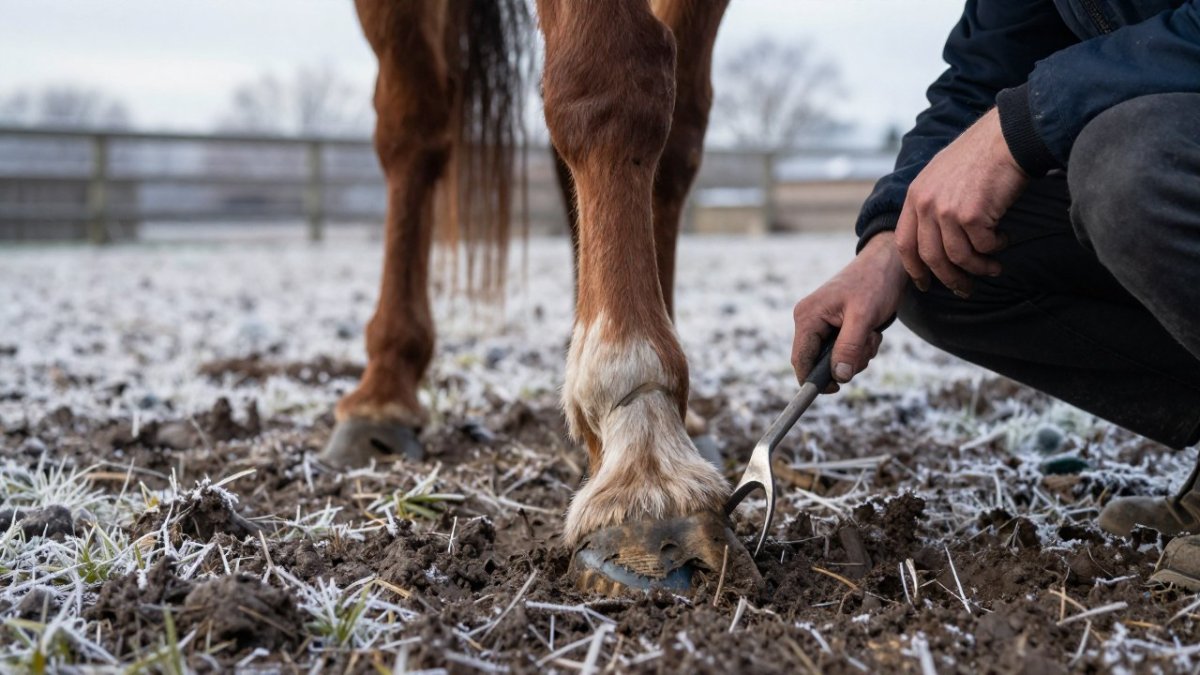
Want a full cold-weather routine? Our guide to winter hoof care tips for horses covers moisture, thrush, and daily checks.
Choosing the Best Hoof Dressing for Winter
A thin, penetrating oil can help seal moisture into the hoof without the heavy film left by thick greasy balms. Apply to a clean hoof, working it into the wall, frog, and heel, daily for damaged hooves, two to three times a week for maintenance.
For a deeper comparison, read our breakdown of the best hoof conditioner for cracked hooves.
For a natural option, Outlaw Nourish Natural Hoof Conditioner is a thin, penetrating oil with lanolin, aloe, flaxseed, and vitamin E that deeply hydrates the hoof wall, frog and heel and helps restore elasticity.
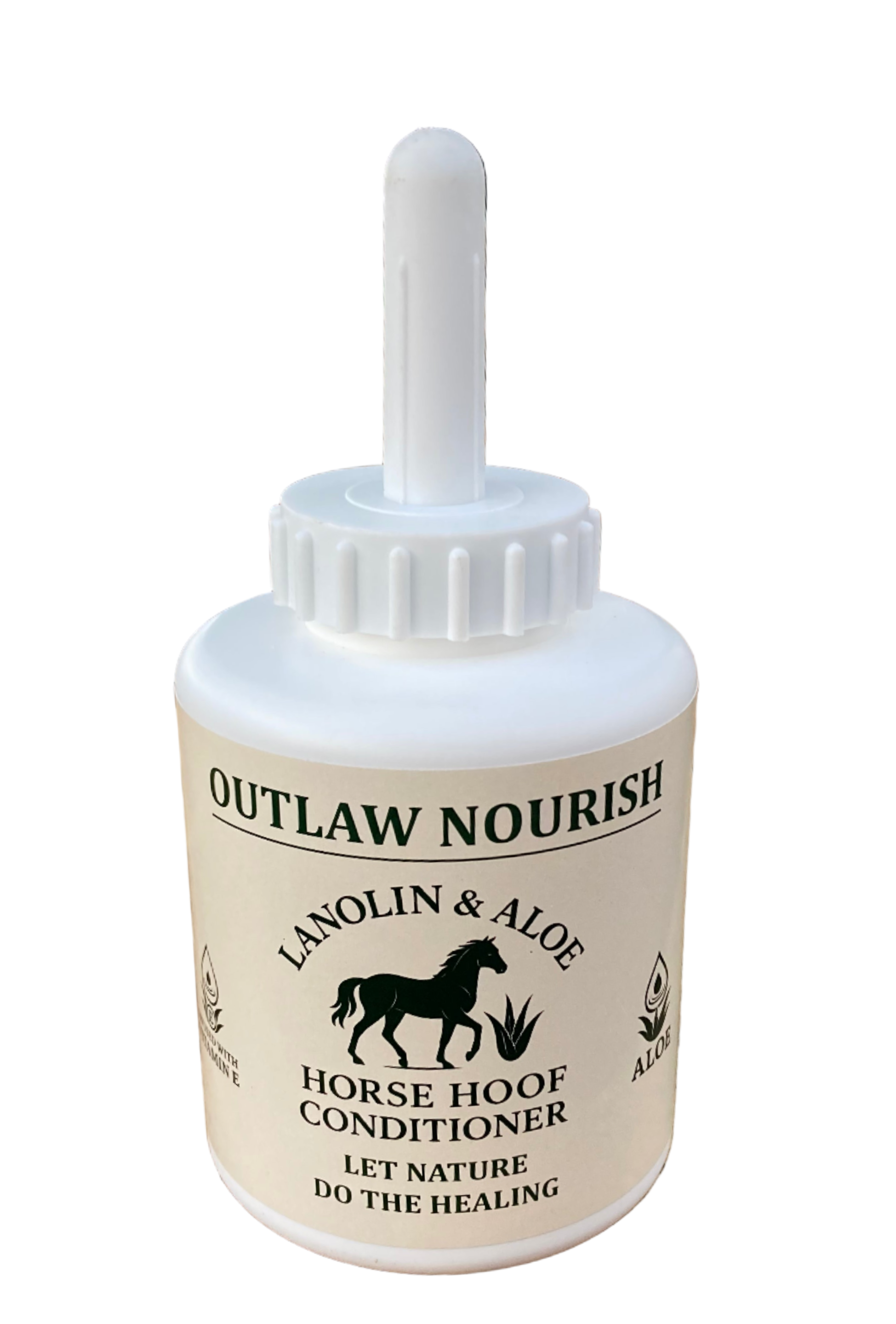
Watch out: greasing a muddy hoof traps grit and moisture against the wall. Clean and dry first, or you'll make it worse.
Here is how and when to apply a thin, penetrating hoof oil through the winter.
| Item | Value | Note |
|---|---|---|
| Best dressing type | Thin, penetrating oil | Seals moisture in without a heavy film |
| Damaged hooves | Daily | Work into wall, frog, and heel |
| Maintenance | Two to three times a week | Apply to a clean hoof |
| Avoid | Greasing a muddy hoof | Traps grit and moisture against the wall |
| Natural option | Outlaw Nourish Natural Hoof Conditioner | Lanolin, aloe, flaxseed, and vitamin E |
Signs of Hoof Abscess in Winter and When to Call Your Farrier
A winter hoof abscess usually shows up as sudden, severe lameness on one leg, often with heat in the hoof and a pounding digital pulse. Call your farrier or vet for sudden non-weight-bearing lameness, heat and swelling in the coronary band, or lameness lasting more than a day or two, and don't dig at the sole yourself.
For recurring abscesses, our article on hoof abscess causes and care explains what keeps them coming back, and learn how to photograph hoof problems before your farrier arrives.
Winter hoof cracks are largely a management issue: control the mud, keep the wall hydrated with a thin natural oil, and catch abscess signs early.
Outlaw Horse Products is formulated by a Journeyman Farrier with 40 years of hands-on experience, and our products are field tested. Our products are designed to work on the worst cases, focusing on the underlying problems rather than just symptoms, with the goal of a sounder horse.
Find Outlaw Horse Products and see how it fits your winter hoof care routine.
Frequently Asked Questions
Why do horse hooves crack more in the winter?
Winter creates a wet-dry cycle that stresses the hoof wall. Hooves absorb water from mud and snow, then dry out quickly in heated barns or cold wind. That repeated swelling and shrinking reduces hoof wall elasticity, so vertical cracks and chipping become more likely. Frozen, uneven ground adds mechanical stress, and reduced turnout can slow hoof growth. Managing moisture and keeping up with trimming are the two most reliable ways to prevent hoof cracks through the season.
Does moisture or dryness cause more hoof cracks in winter?
Both do, and the swing between them does the most damage. Constant wetness softens the hoof wall and invites thrush and white line disease, while dry barn air and bedding pull moisture out and leave hooves brittle. The fix is moisture regulation, not avoidance: keep hooves clean and dry where possible, limit standing in deep mud, and apply a penetrating hoof conditioner such as Outlaw Nourish to deeply hydrate the hoof wall and help restore elasticity.
How often should a farrier check hooves during winter?
Most horses benefit from a farrier visit every six to eight weeks year-round, and winter is not the time to stretch that interval. Shorter days and less riding make it easy to postpone, but unbalanced hooves load unevenly and cracks start at the weakest point. Ask your farrier to check hoof balance, hoof wall integrity, and any early quarter cracks at each visit. If you notice lameness or a crack that is widening, book sooner rather than waiting for the next scheduled trim.
