

Last Updated: November 24, 2026
Quick Summary
Therapeutic shoeing for navicular syndrome changes how load moves through the hoof, reducing stress on the deep structures behind the navicular bone rather than curing the condition. Shoe design, hoof balance and heel height are adjusted to ease tension on the deep digital flexor tendon, and results are judged by how the horse moves.
- Therapeutic shoeing aims to reduce load on the palmar structures, not to cure the underlying condition.
- Hoof balance is often the first thing a farrier checks in a horse with suspected navicular pain.
- Start with the least restrictive shoe that improves gait, and escalate only if the horse plateaus.
- Reassess the shoeing two to three weeks after any major design change, not only at the regular interval.
- A worsening horse after a wedge, pad or extension change should be reviewed before the next visit.
Table of Contents
- What Navicular Syndrome Is and Why Shoeing Matters
- Navicular in Horses Symptoms to Watch For
- Biomechanical Goals of Therapeutic Shoeing
- Horse Hoof Balance and Navicular Syndrome
- Therapeutic Horseshoes for Navicular: Shoe Designs Compared
- Navicular Syndrome Treatment: Working With Your Farrier and Veterinarian
- Follow-Up Schedule, Measurable Outcomes and Signs of Poor Fit
- Evidence Limits and Long-Term Management With Outlaw Horse Products
- Frequently Asked Questions
What Navicular Syndrome Is and Why Shoeing Matters
Navicular syndrome is a chronic cause of forelimb lameness in horses, usually pain that originates in the foot's deep structures behind the navicular bone. Therapeutic shoeing for navicular syndrome aims to change how load moves through the hoof, reducing stress on those structures rather than trying to cure the underlying condition.
Shoeing matters because the foot is the one part of the horse you can adjust every few weeks. Changes in hoof balance, heel height and shoe design alter the angles at which the deep digital flexor tendon and navicular bursa are loaded. Those changes can make a sound-looking horse comfortable again, or make an already sore one worse.
Palmar foot pain and the structures involved
Palmar foot pain is the clinical term for discomfort felt in the back half of the foot, where the navicular bone, the deep digital flexor tendon, the navicular bursa and the collateral ligaments meet. Veterinarians often use it as a working description when the exact source is still being sorted out.
Horses with palmar foot pain typically show a short, stiff stride and a reluctance to land heel-first on hard ground. Lameness is often worse on tight turns and may ease when the horse is given a few days of rest. Because several structures share the same space, a diagnosis usually depends on a combination of gait evaluation, hoof testing, nerve blocks and imaging rather than any single test.
Navicular in Horses Symptoms to Watch For
The symptoms of navicular in horses are subtle, and owners often describe them as "just not quite right" before anything becomes obvious. Watch for a shortened stride in the front legs, a tendency to point one foot, and reluctance to turn or move on a circle. Many horses also shift weight back onto the hind legs when standing still.
A horse that is sound on a straight line may show clear lameness on a lunge circle, particularly on the inside front leg. Some horses improve noticeably with rest and then slip back into discomfort when returned to work. Any persistent change in gait deserves a veterinary exam, because the same signs can reflect other problems in the foot or leg.
Biomechanical Goals of Therapeutic Shoeing
Therapeutic shoeing for navicular syndrome works on a few clear mechanical goals. The first is to reduce tension on the deep digital flexor tendon, which pulls across the back of the navicular bone. The second is to encourage a smoother roll from heel to toe, so the foot breaks over earlier and with less strain.
A third goal is to support the heel and frog so that load is shared more evenly across the sole. Many farriers aim for a shorter toe and a stable, well-supported heel, but the right balance depends on each horse's conformation and how the foot wears between shoeings. Results are judged by how the horse moves, not by the shoe alone.
Horse Hoof Balance and Navicular Syndrome
Hoof balance describes how evenly the foot sits under the leg when viewed from the front, side and sole. An imbalanced foot, with one wall higher or a toe that grows too long, shifts load onto the palmar structures and can keep them irritated. This is why hoof balance is often the first thing a farrier checks in a horse with suspected navicular pain.
Balance is rarely fixed in one session. A farrier may trim to restore the correct angle of the front wall, adjust the heel height and reshape the toe over several visits. Full improvement can take several cycles of shoeing.
Therapeutic Horseshoes for Navicular: Shoe Designs Compared
Therapeutic horseshoes for navicular are not interchangeable prescriptions. The right design depends on the horse's hoof shape, where it loads the foot, how it responds to the first fitting, and what the veterinarian's imaging shows. A practical way to compare options is to ask four questions before a shoe is nailed or glued on: how much heel support the foot needs, whether the toe should break over sooner, how much frog contact is desirable, and how much change the horse can tolerate in one cycle. The sections below compare the most commonly discussed designs against those questions, with the trade-offs that matter in the barn.
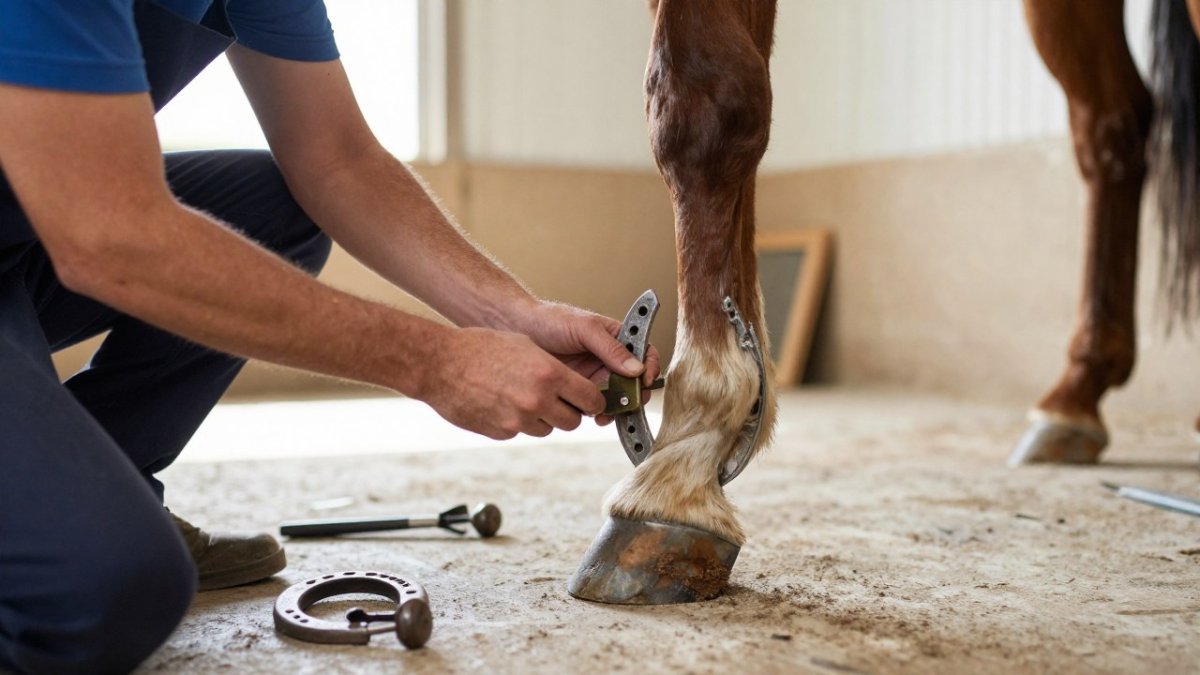
Egg-bar, straight-bar and heart-bar options
Egg-bar shoes extend the heel branches rearward and push load toward the frog and bars, which can reduce strain on the deep digital flexor tendon and the navicular apparatus. They suit horses with a low heel, a long toe, or a foot that lands toe-first and needs the breakover moved back. The trade-off is that egg-bars can shift load strongly; a horse with a thin sole or a sensitive frog may become sore rather than comfortable. Straight-bar shoes provide a stable, flat heel surface without the rearward extension, making them a more conservative first step for horses that need heel support but not a dramatic load shift. Heart-bar shoes add a central frog support that contacts the ground and are often considered when the frog is weak, sheared, or needs extra stimulus; the risk is overloading the frog if the fit is too tight or the horse's foot is already bruised.
A common pattern is to start with the least restrictive option that produces a measurable improvement in gait, then escalate only if the horse plateaus. That means straight-bar or conservative egg-bar first for many horses, heart-bar when frog support is the specific goal, and a return to a simpler shoe if the horse becomes worse rather than better.
Wedge shoes, pads, rolled toes and shoe extensions
Wedge pads raise the heel and change the foot's angle, which can ease tension on the deep digital flexor tendon in horses with a low heel or a diagnosis tied to tendon load. They are not a universal fix: raising the heel too much can move load onto the toe and the dorsal hoof wall, and some horses become stiff or short-strided after a wedge is added. Rolled or rockered toes encourage the foot to break over earlier, reducing the time the toe spends bearing weight; they are considered when the horse shows a clear toe-first landing or a long toe that is slow to leave the ground. Shoe extensions, whether at the toe or the heel, change the base of support and should be used sparingly because they alter leverage on the entire foot.
Pads are a separate decision from shoe type. A pad can provide sole protection, add frog support, or house a wedge, but it also traps debris and changes the foot's moisture environment. Pads are usually reassessed at every shoeing rather than left on indefinitely.
Watch out: a horse that becomes suddenly more lame after a wedge, pad, or extension change may be telling you the adjustment went too far, and the shoe should be reviewed before the next scheduled visit rather than after another cycle.
Matching the design to the horse, not the diagnosis
No single shoe is appropriate for every horse with navicular syndrome. A horse with a upright, contracted foot and a horse with a low, underrun heel may both have palmar foot pain, but they need different loading patterns. The veterinarian's examination and imaging identify which structures are involved; the farrier's hoof assessment identifies what the foot can tolerate; the horse's response in the first week identifies whether the plan is working. A design that looks correct on paper but produces a shorter stride or a reluctance to turn is the wrong design for that horse, regardless of what the textbook says.
A practical decision guide looks like this: for a low heel with a long toe, consider an egg-bar or straight-bar with a rolled toe and a conservative heel support; for a weak or sheared frog, consider a heart-bar or a frog-support pad; for a horse that lands toe-first with a steep foot, consider a rolled toe and a modest wedge, reassessed in two to three weeks; for a horse that is comfortable in a plain shoe with a balanced trim, do not add complexity just because a diagnosis exists. The best plan is the one that reduces lameness on the individual animal and can be maintained between visits.
The table below summarises the most commonly discussed shoe designs and the situations each is considered for, based on the article's comparison.
| Design | Considered for | Key trade-off |
|---|---|---|
| Egg-bar | Low heel, long toe, toe-first landing | Can shift load strongly; sore if sole is thin |
| Straight-bar | Heel support without dramatic load shift | More conservative first step |
| Heart-bar | Weak, sheared or underused frog | Overloads frog if fit is too tight |
| Wedge pad | Low heel, tendon-load concerns | Too much height moves load to toe |
| Rolled toe | Toe-first landing, long toe | Earlier breakover; reassess fit over time |
| Shoe extensions | Altering base of support | Changes leverage; use sparingly |
Navicular Syndrome Treatment: Working With Your Farrier and Veterinarian
Navicular syndrome treatment works best when the farrier and veterinarian share the same diagnosis and goals. The veterinarian confirms the source of pain, rules out related conditions and may recommend imaging or medication. The farrier turns that information into a shoeing plan and reports back on how the foot is wearing and how the horse is moving.
Owners are encouraged to keep a simple record of each shoeing, including the date, the design used, and how the horse looked in the following week. Those notes help both professionals decide whether to keep, adjust or change the approach. Farrier treatment results can take time to show, and they are easiest to judge when the vet and farrier compare notes.
Follow-Up Schedule, Measurable Outcomes and Signs of Poor Fit
Most horses in therapeutic shoes are reassessed at each regular shoeing interval, commonly every four to six weeks, with a closer check two to three weeks after any major change in design. That closer check matters because the foot can respond to a new load pattern within days, and a plan that looked right at fitting can reveal problems before the next full cycle. A simple written record at each visit, including the date, the design used, the horse's gait score, and any changes in comfort, gives the veterinarian and farrier something concrete to compare.
Measurable outcomes are more useful than general impressions. Owners can track stride length at the walk and trot on a consistent surface, willingness to turn on a small circle, time spent resting a forefoot when standing, and the horse's response to hoof testers at the next visit. A horse that is improving usually shows a longer stride, a more willing turn, and less weight-shifting; a horse that is not improving may show no change or a gradual return of the original signs. These observations are not a substitute for veterinary assessment, but they help decide whether to keep, adjust, or change the shoeing plan.
Signs of poor fit or a complication need prompt attention rather than waiting for the next scheduled visit. These include new heat or swelling in the foot, a sudden increase in lameness, a horse that refuses to bear weight on a foot, cracks or heel collapse, a shoe that has shifted or sprung, and a frog that looks bruised or sheared. Pressure from a shoe or pad can also cause a corn-like bruise at the heel or sole, which may only become visible when the shoe is removed. Any of these should prompt a call to the farrier and, if the horse is in pain, the veterinarian.
Watch out: a horse that improves for a week and then worsens before the next shoeing may be showing that the shoe is no longer fitting the foot as it grew, not that the diagnosis has changed, so the shoe should be reviewed rather than abandoned.
Between visits, hoof condition is part of the follow-up. Dry, brittle hooves can crack and lose shoe retention, while excessively wet hooves can soften and bruise. Monitoring moisture and condition alongside the shoeing plan helps keep the foot stable between cycles. Long-term management usually combines careful shoeing, appropriate exercise, attention to hoof condition, and regular veterinary review, and the follow-up record is what makes that combination adjustable rather than guesswork.
Evidence Limits and Long-Term Management With Outlaw Horse Products
The evidence behind shoeing for navicular syndrome is mixed. Many recommendations come from clinical experience and small studies, and results vary between horses. Owners should be wary of any claim that a single shoe or product will resolve the condition, and should ask their professionals which parts of the plan are well supported and which are based on experience.
Long-term management usually combines careful shoeing, appropriate exercise, attention to hoof condition and regular veterinary review. Hoof health supports every part of that plan. Outlaw Horse Products develops hoof care products from more than 40 years of hands-on farrier work, field tested for years. For professional advice on your specific horse, work with your farrier and veterinarian first.
Outlaw Horse Products was developed by a Farrier with forty years of hands-on experience, and our products are field tested for years. Explore our current range at Outlaw Horse Products to see the hoof care options we offer.
Frequently Asked Questions
What is the best way to shoe a horse with navicular syndrome?
There is no single shoe that suits every horse. Therapeutic shoeing for navicular syndrome is usually built around hoof balance, breakover and heel support, with the specific design chosen after a lameness evaluation and discussion between the farrier and veterinarian. Common options include egg-bar, straight-bar and heart-bar shoes, sometimes combined with a wedge pad or rolled toe. The aim is to reduce strain on the palmar structures of the foot while keeping the hoof in functional balance. Changes should be reviewed at each reshoeing, because the response of one horse can differ widely from another.
Can therapeutic shoeing cure navicular syndrome?
Therapeutic shoeing is generally used to manage navicular syndrome rather than cure it. The goal is to reduce discomfort and support sound function so the horse can keep working comfortably. Results vary with the stage of the condition, the horse's conformation and how consistently the trimming and shoeing plan is followed. Many horses improve with a combination of shoeing changes, conservative treatment and monitored follow-up, but the evidence base for specific shoe designs is limited, so outcomes should be judged over several cycles rather than one visit.
How often should a horse with navicular syndrome be reshod?
Most horses with navicular syndrome are reshod on a regular schedule, often every four to six weeks, though the interval depends on hoof growth, shoe wear and how the horse is moving. Shoes should be checked between sessions for loss of fit, changes in balance or new signs of discomfort. The farrier and veterinarian may agree on a follow-up schedule with clear review points, so that changes in gait, shoe wear and hoof growth are recorded and used to adjust the plan.
Should a veterinarian or farrier diagnose navicular syndrome?
Navicular syndrome should be diagnosed through a lameness evaluation carried out by a veterinarian, often supported by imaging such as radiographs and diagnostic nerve blocks. A farrier contributes by assessing hoof balance, shoe wear and conformation, and by carrying out corrective or therapeutic shoeing once a diagnosis has been made. The two professionals work best together, sharing observations so that the shoeing plan matches the veterinary findings and the response of the horse is tracked over time.
