

Last Updated: November 26, 2026
Quick Summary
Professional grade hoof care for trainers is the disciplined daily work of keeping every horse's feet clean, conditioned, and monitored for early problems, combined with knowing exactly when a farrier or vet needs to take over. The standard rests on four things: daily inspection, correct cleaning, consistent conditioning, and honest documentation of what you find.
- Trainers handle daily picking, cleaning, conditioning, and observation; farriers handle trimming, shoeing, and corrective work.
- Clean the hoof, apply thrush treatment into the crevices daily until resolved, then two to three times weekly for prevention.
- Apply conditioner daily for damaged hooves and two to three times weekly for maintenance.
- Position yourself at the horse's shoulder with a clear escape path and use a quick-release knot on the lead rope.
- Deep, clean bedding and dry footing remove the environment thrush needs to survive.
Table of Contents
- What does professional grade hoof care for trainers involve?
- Quick Comparison: Professional Hoof Care Products for Trainers
- Farrier Tools and Supplies Every Trainer Should Recognize
- Horse Thrush Treatment: Catching It Before It Reaches the Frog
- Choosing a Hoof Conditioner for Horses in Training
- How Trainers Can Assess Product Quality and Practical Competency
- Building a Daily Hoof Care Routine That Holds Up in Wet Conditions
- Stocking Your Barn with Field-Tested Hoof Care Products
- Frequently Asked Questions
What does professional grade hoof care for trainers involve?
Professional grade hoof care for trainers is the disciplined daily work of keeping every horse's feet clean, conditioned, and monitored for early problems, combined with knowing exactly when a farrier or vet needs to take over. The standard rests on four things: daily inspection, correct cleaning, consistent conditioning, and honest documentation of what you find. Trainers who master those four habits catch thrush, cracks, and abscesses while they are still small.
The distinction matters because a training barn runs on soundness. A horse that goes lame from a preventable hoof infection loses weeks of conditioning, and the cost lands on the trainer, not just the owner.
Below, we break down what trainers should handle themselves, what belongs to the farrier, and how to choose products and people you can trust.
Quick Comparison: Professional Hoof Care Products for Trainers
The fastest way to stock a barn is to match each product to the problem it solves. Here is how the Outlaw Horse Products range lines up for a working trainer:
| Product | Price | Primary Use | Best For |
|---|---|---|---|
| Outlaw Thrush Stuff™ | $24.99 | Thrush, white line, deep central sulcus | Daily treatment and prevention |
| Outlaw Nourish Hoof Conditioner | $38.99 | Dry, cracked, brittle hooves | Maintenance conditioning |
| Outlaw Hoof Canker Care | $42.99 | Canker, severe thrush, abscesses | Advanced cases after debridement |
| Outlaw Laminitis Founder Pad | $210.00 | Acute laminitis support | Rehab and recovery |
Price
The laminitis pad is a different category: it is designed for horses diagnosed with laminitis and is used alongside your farrier and vet.
Best for: trainers who want a small, focused kit rather than a shelf of half-used bottles. Skip if: you are looking for a single product to solve every hoof problem. No product does that, and any label claiming otherwise deserves suspicion.
Farrier Tools and Supplies Every Trainer Should Recognize
You do not need to swing a hammer to benefit from knowing the tools. Trainers who can name what a farrier is holding, and why, ask better questions and spot problems earlier.
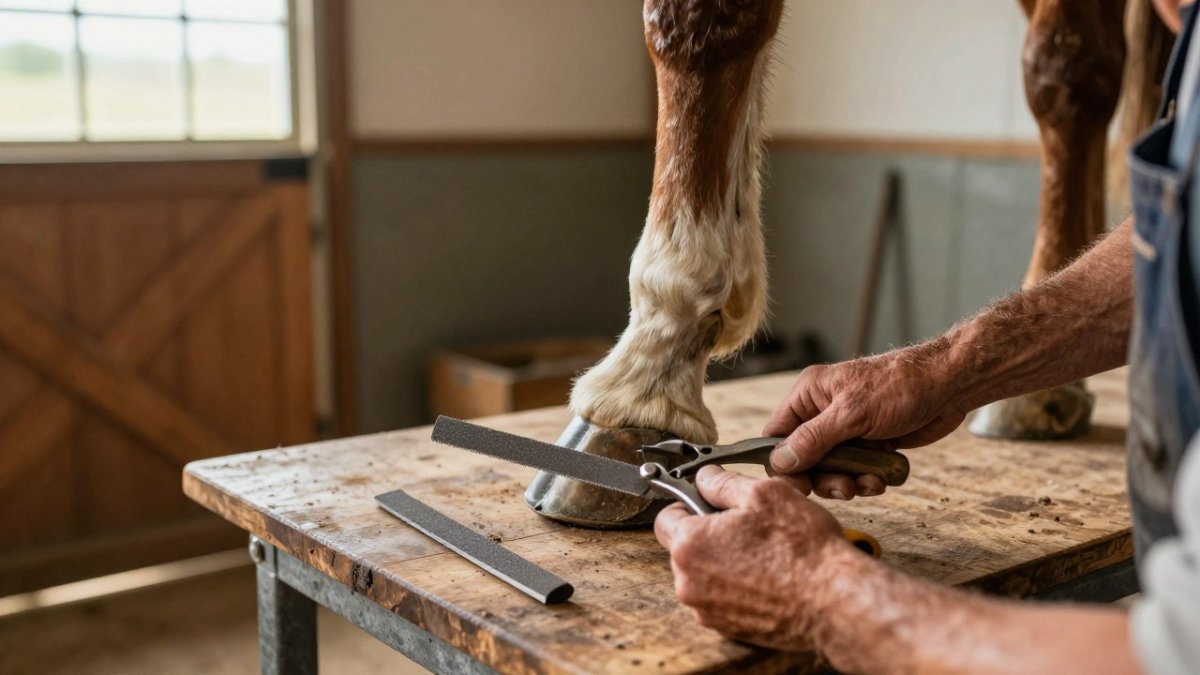
The core farrier tools and supplies are straightforward:
- Hoof nippers for trimming excess wall
- Hoof knife for cleaning the sole and frog
- Rasp for finishing the wall and leveling
- Nail puller and shoe puller for removing shoes
- Clincher for seating nails on a shod foot
- Hoof stand to hold the foot safely while working
What Trainers Handle vs. What Farriers Handle
This boundary is where most barns get sloppy. Trainers handle daily picking, cleaning, conditioning, and observation. Farriers handle trimming, shoeing, and any corrective work that changes the shape or balance of the foot. Vets handle lameness diagnosis, abscess drainage, and canker or laminitis treatment plans.
Crossing that line creates real risk. A trainer who "tidies up" a sole with a hoof knife can easily go too deep and cause an abscess. Our advice: pick, clean, condition, and record. Leave the blade work to the professional.
If you are learning the tool set from scratch, this breakdown of essential farrier tools for beginner hoof care is a sensible starting point.
Horse Thrush Treatment: Catching It Before It Reaches the Frog
Horse thrush treatment works best when it starts before the frog is involved. Thrush is a bacterial infection of the hoof that thrives in wet, dirty conditions, and it announces itself with a black, foul-smelling discharge around the frog and sulcus. Catch it at that stage and you are looking at days of treatment. Let it reach the sensitive tissue and you are looking at lameness.
Thrush hides in the deep central sulcus, and a surface wipe with a mild product will not reach it. For a proven treatment you can apply immediately, see Thrush Treatment for Horses Outlaw Thrush Stuff™, White Line, Severe Central Sulcus Thrush. The other mistake is reaching for something harsh.
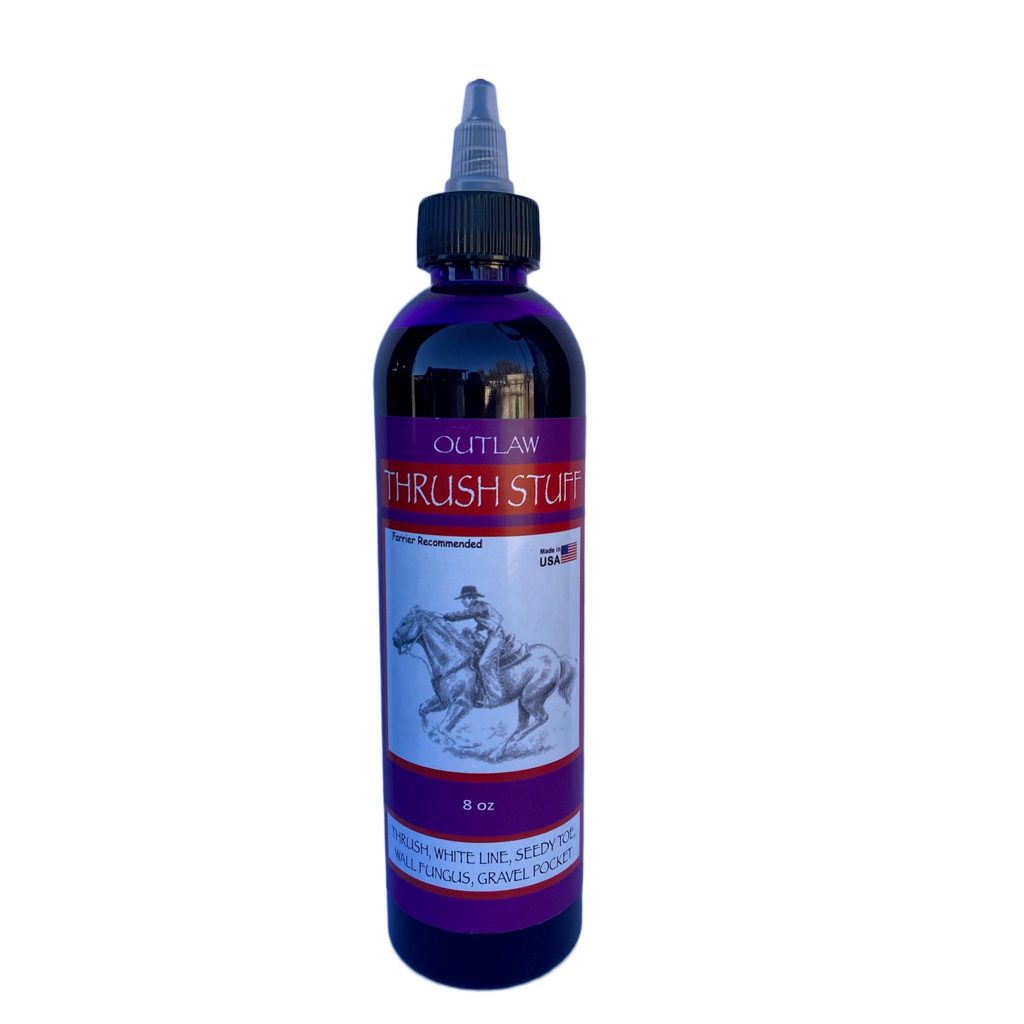
Outlaw Thrush Stuff™ is a potassium-based formula with no gentian violet and no iodine. It is non-caustic and non-stinging, and is designed for daily application into cracks and the deep sulcus. Clean the hoof, apply directly into the crevices, use daily until the thrush resolves, then continue two to three times weekly for prevention.
Choosing a Hoof Conditioner for Horses in Training
A hoof conditioner for horses in training has one job: hold moisture balance in a foot that is working hard. Training schedules mean frequent bathing, sweat, and exposure to wet-dry cycles, all of which strip the hoof wall and leave it brittle.
Conditioner is a hoof-care treatment, not a cosmetic. A dry, cracked wall loses strength. Look for penetrating oils rather than surface coatings, and check the ingredient list before the marketing copy.
Outlaw Nourish Natural Hoof Conditioner is built on lanolin oil, aloe oil, flaxseed oil, and vitamin E, with no petroleum. It is a thin, penetrating oil that delivers moisture to the hoof wall, frog, and heel. For damaged hooves, apply daily; for maintenance, two to three times weekly.
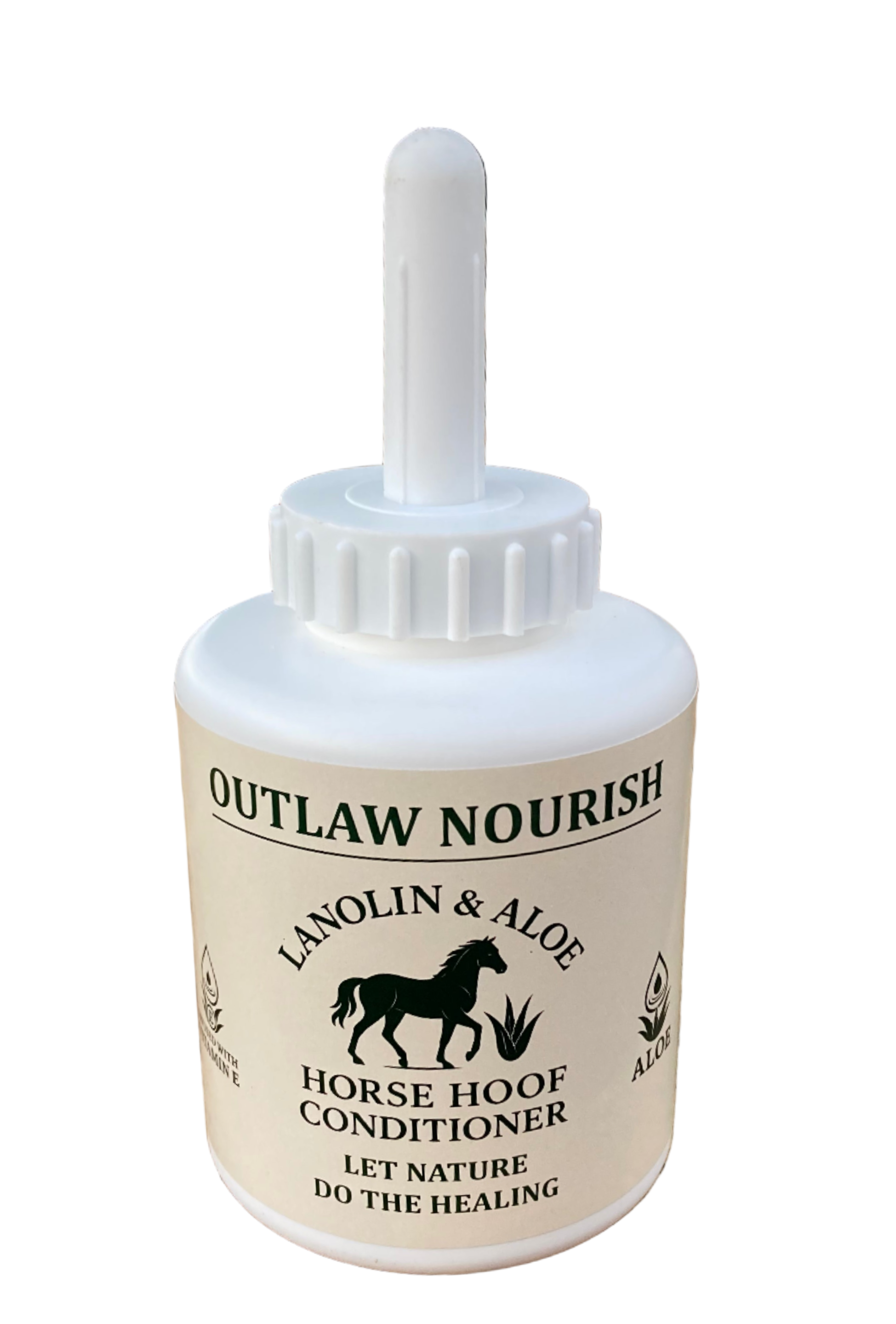
Best for: horses in consistent work, dry climates, and barns with wet-dry swings. Skip if: you want a show-shine product. This is a treatment oil, not a cosmetic.
How Trainers Can Assess Product Quality and Practical Competency
Assessing quality comes down to two questions: does the product do what it claims, and does the person recommending it know what they are talking about?
On products, read the label for what is absent as much as what is present. A hoof product that lists its full ingredients earns more trust than one that hides behind a proprietary blend. Ask three concrete questions before you buy: Does the formula sting or burn on sensitive tissue? Is it safe to apply into an open crack or a deep sulcus? Will the maker stand behind it if it does not work on your horse? A product that fails any of those is not professional grade, no matter how it is marketed.
On people, ask about hands-on hours, not certificates alone. Certification and formal hoof-care training matter, but practical competency shows up in how a practitioner handles a nervous horse, how they explain a finding, and whether they will tell you to call a vet. A neutral checklist helps: supervised practice hours, a clear assessment standard, continuing education, and a defined scope of practice. If a practitioner cannot describe their scope in plain language, that is a warning sign.
This is also where the trainer's own boundary matters. Trainers can safely learn daily picking, cleaning, conditioning, and observation. Trimming, shoeing, and any corrective work that changes the shape or balance of the foot belong to a qualified farrier. Abscess drainage, lameness diagnosis, and canker or laminitis treatment plans belong to a vet. Crossing that line creates real risk: a trainer who 'tidies up' a sole with a hoof knife can easily go too deep and cause an abscess. The professional standard is to pick, clean, condition, and record, then refer the blade work to a qualified farrier.
Outlaw Horse Products encourages buyers to check that a business is honest, stands by its convictions, and stands behind its products. Our approach is drawn from forty years of hands-on experience as a Journeyman Farrier.
Building a Daily Hoof Care Routine That Holds Up in Wet Conditions
The routine itself is simple; the discipline and the safety habits around it are what fail.
Here is the daily sequence we recommend:
- Pick out all four feet, working from heel to toe
- Scrub the sulcus and frog with a stiff brush
- Check for black discharge, odor, or heat
- Apply conditioner to dry or cracked walls
- Record anything unusual in the barn log
- Clean and dry the stall, and check bedding depth
- Re-check any horse with a previous history of thrush
The stall matters as much as the foot. Deep, clean bedding and dry footing remove the environment thrush needs. Horses standing in mud all day will fight the same infection repeatedly no matter what you apply.
Safety protocols are where most routines quietly break down. Position yourself at the horse's shoulder, not directly in front of or behind the leg, and keep a clear escape path. Use a quick-release knot on the lead rope and never wrap it around your hand. Keep tools pointed away from the horse and never leave a hoof knife or rasp on the ground where a horse can step on it. Watch out: if a horse is consistently pulling a foot away, kicking, or leaning hard, stop and reassess rather than forcing the foot up, because that is how handlers get hurt and horses learn to resist.
Tracking how many thrush cases you treat, how many hoof-related training days you lose, and how often you refer a horse to the farrier or vet gives you a record to review. When you can show a farrier exactly what you observed and when, referral conversations are easier to have.
For a fuller wet-season protocol, this guide to rainy hoof care and thrush prevention walks through the barn routine in more detail.
Stocking Your Barn with Field-Tested Hoof Care Products
Stocking a barn well means buying fewer products that cover more ground. A trainer needs a thrush treatment, a conditioner, and something for advanced cases, and that is close to the whole kit.
Our products are hands-on and field tested, and they are designed to work on the worst cases. The focus is on the underlying problem, not just the symptom.
For barns ready to stock up, the Outlaw Horse Products starter mix pack bundles six bottles of Thrush Stuff, four of Nourish conditioner, and three of Canker Care with free shipping. It covers the three problems a working trainer meets most often.
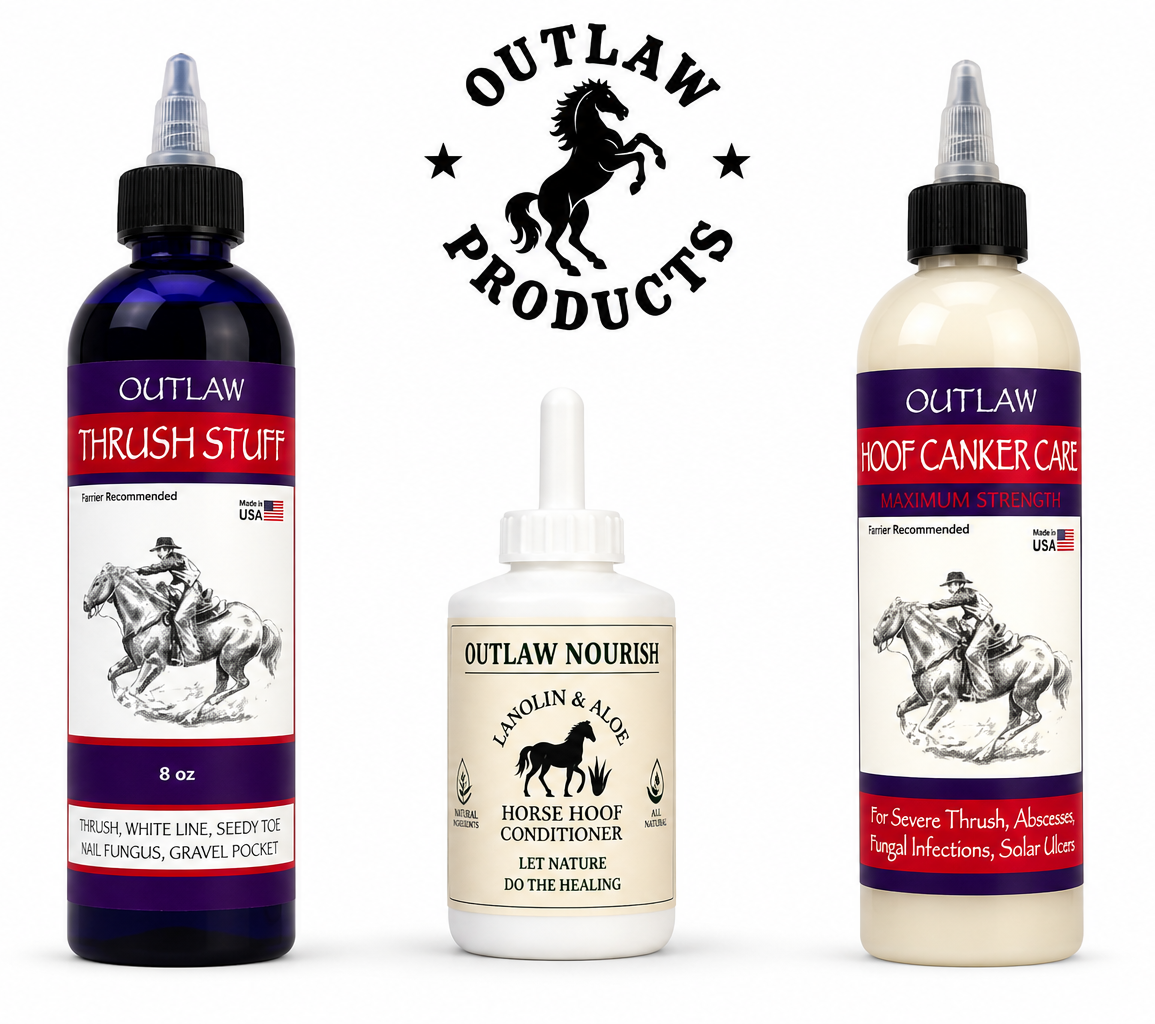
Best for: boarding operations, training barns, and rehab yards managing multiple horses. Skip if: you own one horse with no history of hoof problems. A single bottle will last you longer than a case.
Soundness is the one asset a trainer cannot replace quickly, and it starts at ground level. If your barn is still reacting to hoof problems instead of preventing them, Outlaw Horse Products gives you field-tested, farrier-developed tools built from forty years of hands-on experience: non-stinging thrush treatment, a penetrating natural conditioner, and a canker formula for the hard cases. Outlaw Horse Products offers farrier-developed hoof care products, field tested for years, with forty years of hands-on experience behind them. Find them to put a hoof care routine in place that holds up through the wet season.
Frequently Asked Questions
What hoof care supplies should a horse trainer keep on hand?
A trainer's kit should cover daily cleaning and early treatment: a hoof pick, a stiff brush, and a hoof conditioner for horses with dry or cracked walls. Add a non-stinging horse thrush treatment for central sulcus and white line cases, plus disposable gloves and bandage tape. Keep a hoof knife out of the daily kit unless you are trained to use it; that work belongs to a farrier.
How can trainers recognize signs of thrush, canker, or an abscess?
Thrush shows as a dark, soft, foul-smelling frog, often in the central sulcus or along the white line, and a horse that flinches when the hoof is picked. Canker looks different: a moist, proliferative, cauliflower-like growth on the frog or sole that bleeds easily. An abscess usually brings sudden lameness, heat in the hoof, and a strong digital pulse. Thrush and early canker respond to daily topical care; an abscess needs a farrier or veterinarian to locate and drain it.
When should a trainer contact a farrier or veterinarian about a hoof problem?
Call a farrier for anything involving hoof balance, shoeing, or trimming, and for a hoof that has stopped responding to topical treatment after a week or two. Call a veterinarian for sudden severe lameness, heat and swelling above the hoof, a suspected abscess, or any sign of laminitis such as the founder stance. Canker always needs professional debridement alongside daily topical care. Trainers who treat early and escalate at the right moment protect both the horse and their own schedule.
What should trainers look for when choosing a hoof care product?
Check the ingredient list first. Outlaw Nourish, for example, lists lanolin oil, aloe oil, flaxseed oil, and vitamin E, with no petroleum or synthetic dyes. Look for a formula that will not sting or burn sensitive frog tissue, since a horse that associates hoof handling with pain gets harder to handle every week. Ask whether the product holds up in wet, muddy conditions, and whether the maker stands behind it.
How often should a horse's hooves be checked?
Pick out and inspect every hoof daily, before and after work, and note any change in smell, frog texture, or the white line. The right farrier interval depends on growth, workload, and shoeing. Trainers managing large strings should log hoof condition weekly so small problems get caught before they become lameness. Consistency matters more than any single product.
