

Are You Sure? a Horse Hoof Health Guide
Hoof problems rarely announce themselves with drama. More often they begin quietly — a slightly darker sulcus, a faint odor, a hoof that chips a little more than it used to. By the time lameness appears, the issue has usually been developing for weeks. That is why the most useful question a horse owner can ask is a simple one: are you sure? Are you sure that crack is only cosmetic? Are you sure the thrush cleared up? Are you sure your hoof care routine is actually working?
This guide walks through the common hoof conditions horse owners and farriers deal with, how to spot them early, and how a natural, condition-specific approach to hoof care fits into a sensible management plan. It draws on the long-standing practical experience behind Outlaw Horse Products, a line built on more than 40 years of master farrier work.
Why Hoof Problems Are Easy to Miss
Horses evolved to stand and move on their hooves for most of every day, and the hoof is a remarkably durable structure. That durability is also a liability: early damage is often hidden in the parts of the hoof you cannot see from the side. The central sulcus (the deep groove between the heel bulbs), the white line (the seam where the hoof wall meets the sole), and the sole itself are all common starting points for trouble.

Owners who pick out hooves daily have a real advantage. A baseline of what "normal" smells, feels, and looks like for each individual horse makes small changes obvious. It is worth being systematic about it. If you already keep a conditioning or fitness routine for your horse, the same discipline applies to hooves: consistency beats occasional deep cleaning. The general principle of regular, structured activity — the kind described in public health activity guidance — translates well to hoof maintenance, where small daily habits outperform sporadic effort. Understanding hoof anatomy and how sensitive horse hooves really are makes those subtle changes easier to recognize.
Thrush: The Condition Most Owners Underestimate
Thrush is a bacterial and fungal infection of the hoof's frog and sulci, most common in horses kept in wet or dirty footing. Mild thrush produces a black, foul-smelling discharge. Severe thrush — particularly when it invades the central sulcus — can become deep, painful, and surprisingly stubborn.
This is where "are you sure?" matters most. Owners frequently treat thrush until the smell fades and stop there, but the infection can persist deeper in the tissue. A hoof that is dry on the surface may still harbor active infection in the sulcus. A dedicated treatment such as Outlaw Thrush Stuff™ for white line and severe central sulcus thrush is formulated for these tougher cases, and consistent application over the full course matters more than a single aggressive cleaning. For barns managing multiple horses, the 12-pack wholesale case of Thrush Stuff™ keeps treatment on hand so a course is never interrupted. If you have ever wondered whether humans can catch thrush from a horse, it is worth reading up before you handle infected hooves bare-handed.
Signs that thrush is more than mild
- Deep, narrow central sulcus that traps debris
- Lameness or sensitivity to hoof testers at the heels
- Bleeding or raw tissue when the sulcus is cleaned
- Recurrence within weeks of finishing treatment
Canker and White Line Disease: The Serious End of the Spectrum
Canker (proliferative pododermatitis) is a far more serious condition than thrush. It involves abnormal, proliferative tissue growth in the hoof, often starting in the frog and spreading. It is notoriously difficult to manage and requires veterinary involvement alongside farrier care. White line disease, by contrast, is a separation and infection along the white line that can hollow out the hoof wall from the inside — invisible until it is advanced.

Both conditions reward early recognition. A specialized product like Outlaw Hoof Canker Care is designed to support management of canker and severe white line cases, and the White Line Rescue advanced hoof treatment targets the white line specifically. Neither replaces a veterinarian's diagnosis. Instead, they fit into a broader plan built with your vet and farrier — the kind of coordinated team approach that professional organizations such as the American College of Sports Medicine advocate for human athletes, and which applies just as well to equine hoof health. For a deeper look at canker itself, see this complete guide to hoof canker treatment.
Nutrition and Conditioning: Feeding the Hoof From the Outside In
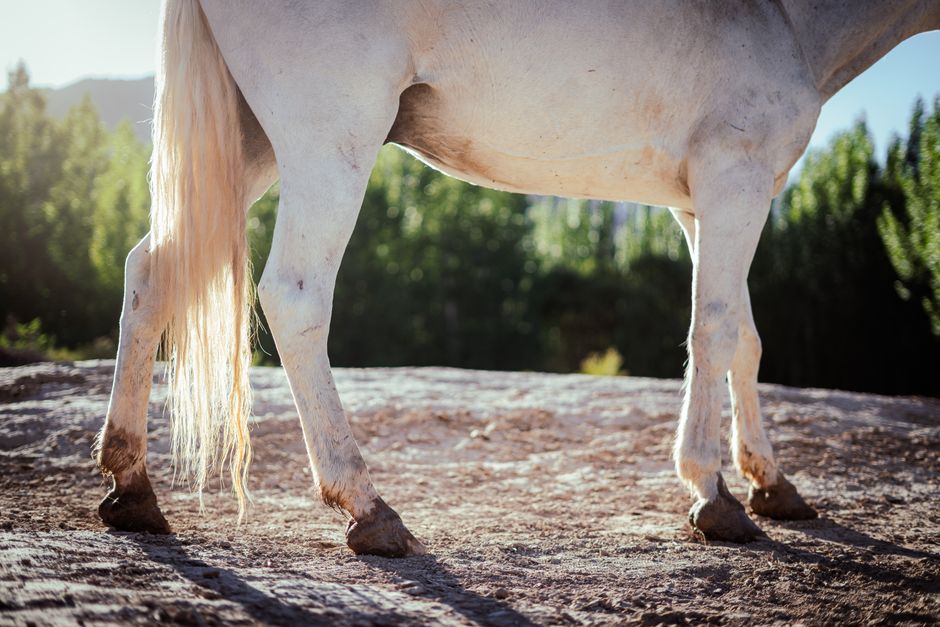
Hoof horn grows slowly — roughly a centimeter or less per month at the coronet — so any change in condition takes time to show. Dry, cracked hooves benefit from external conditioning that restores flexibility to the wall and sole. A natural hoof conditioner like Outlaw Nourish™ hoof oil for dry, cracked hooves is designed to rebuild strength and flexibility rather than simply coat the surface.
Consistency is the whole game. Applying conditioner a few times a week for months is what produces visible change; a single application before a show will not. The same incremental mindset applies to exercise and conditioning programs — the ACE Fitness exercise library is a useful reminder that progressive, repeatable routines outperform sporadic intensity, whether the athlete is human or equine.
Supporting Horses Through Lameness and Founder
Horses recovering from laminitis or founder need more than topical treatment. Comfort and support under the hoof can make a meaningful difference during recovery, which is why products such as the Outlaw Laminitis Founder Hoof Comfort Pad exist — to reduce load and provide cushioning while the hoof stabilizes. These are supportive aids, not cures, and should always be used under veterinary guidance.
Getting horses to accept treatment is its own challenge. Many hoof products are bitter or off-putting, and a horse that fights application turns a five-minute job into a battle. A taste-neutral enhancer like Outlaw Medi-Done™ taste flush can help when oral medications or supplements are part of the plan. For professionals buying in volume, the Outlaw wholesale products collection and the mixed thrush, nourish, and canker mix pack make it easier to stock a full range of treatments.
Building a Hoof Care Routine That Actually Works
- Pick out hooves daily and note smell, color, and texture changes.
- Keep footing dry where possible — mud and urine are thrush's best friends.
- Treat the full course, not just until symptoms fade.
- Schedule regular farrier visits and ask about the white line and sulci at every appointment.
- Involve your veterinarian early for canker, white line disease, or any lameness.
- Condition consistently with a natural hoof product rather than intermittently.
- Record what you see — photos and notes make subtle changes obvious over time.
None of this is glamorous. It is the same message a master farrier would give: the horse tells you early, if you are paying attention. A solid hoof care basics guide for horse owners is a good place to build that routine from the ground up.
Conclusion: Ask the Question Before the Problem Does
"Are you sure?" is not skepticism — it is diligence. Are you sure that hoof is healthy, or just not obviously lame yet? Are you sure the thrush is gone, or just less smelly? Natural, targeted hoof care, backed by decades of farrier experience, gives owners and professionals better tools for the job. But the real work is attention, consistency, and knowing when to call in your vet. Start with a careful daily look, treat the condition you actually find, and give the hoof the time it needs to rebuild. That is how strong, flexible, resilient hooves are made. If your horse’s hooves need real support — not another generic farm‑store fix — see the Outlaw formulas built for fast, visible results.